

UK Study Surveys Virtual Reality for Memory Loss
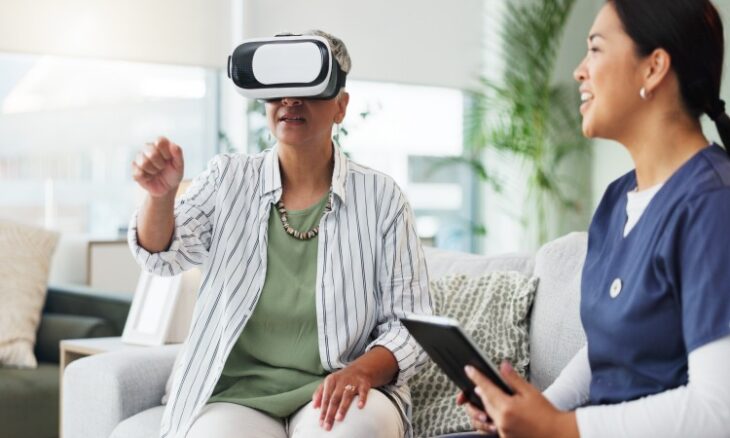
Inside a virtual reality headset, a winter wonderland can appear even when there is no snow outside. University of Kentucky researchers are studying whether that kind of immersive environment, combined with gaming and music, can help people with cognitive dysfunction.
The technology is intended to make brain exercises feel less like work and more like play. Researchers are examining whether interactive activities can engage different parts of the brain while requiring participants to remember information and complete tasks.
Dr Amanda Glueck, an associate professor of neurology at the University of Kentucky, has spent nearly a decade researching ways to help the brain recover from conditions including stroke and concussion. She is now studying whether the same approach could eventually help people experiencing memory loss as they age.
The virtual reality programme was created by Richard Hoagland, CEO of VRTogether, in partnership with Glueck. It combines games, music and other activities intended to engage different parts of the brain.
Instead of asking patients to memorise lists of words, the programme can place them in an interactive virtual environment where remembering information is part of completing a task. The approach is designed to make memory exercises more engaging.
One example used by the researchers involves a purple spaceship. A participant learns from the game that the spaceship must be fired at least 5 times before it can be defeated. Remembering that information becomes part of the task rather than a separate exercise in memorisation.
The example contrasts with asking someone with a memory problem to remember five specific words. Glueck’s explanation of the approach focuses on making the task less boring and less daunting by embedding the memory requirement within a game.
Music and singing are also included in the programme. Researchers are studying how these activities can support memory recall while requiring participants to concentrate on rhythm, breathing and other skills.
Singing can involve memory recall, matching a rhythm, and focusing on the diaphragm and breathing. These elements form part of the activities being used to engage participants during the programme.
Glueck has seen results from the approach among people recovering from stroke and concussion. The researchers are now examining whether those techniques could also help people dealing with memory loss associated with ageing.
Music is another part of that research. Glueck has said that music can transport a person to a different time, triggering memories. The programme therefore includes music as one way of engaging memory recall.
The virtual reality experience can also be personalised. Researchers can use specific songs, games, and scenarios tailored to a patient’s needs and interests. This allows the activities to be adapted for individual participants within the programme.
The researchers do not intend the technology to replace real-world experiences. Instead, Hoagland has described it as another tool that can give people opportunities to overcome challenges and barriers.
The programme combines several activities into a single virtual experience. Games require participants to retain information to complete tasks, while music and singing introduce memory recall, rhythm, breathing and other elements. Researchers are studying how these activities can engage different parts of the brain.
The work builds on Glueck’s research into recovery following stroke and concussion while turning attention towards age-related memory loss. The researchers are examining whether techniques used in that earlier work can also be applied to people experiencing age-related changes in memory.
The second phase of the trials is expected to involve recruitment of Kentuckians sometime next year. The researchers will continue their study of the approach as they examine its use in people dealing with memory loss.
For now, the research centres on the use of virtual reality, games and music as part of activities intended to engage memory and other functions. The next phase of trials will further investigate whether those techniques could help people experiencing age-related memory loss.